Government sales are won before they reach SAM.gov
Public postings on SAM.gov mark the end of the buying process. Learn how to spot buying indicators and shape requirements before a deal reaches a bid board.

Most teams selling to government and education build pipeline by watching portals. They check SAM.gov or a stack of bid boards each morning, find a solicitation that fits, and start writing a response.
That approach misses where deals are actually decided.
This guide covers government sales strategies before SAM.gov and every other portal. It explains why waiting for a formal solicitation can put you behind, where early demand shows up, and how to rank accounts, reach buyers, and shape requirements while they’re still open.
TL;DR: How do you find government sales opportunities before they reach SAM.gov?
Find government sales opportunities before formal solicitations by tracking board discussions, budgets, grants, leadership changes, and expiring contracts. Prioritize accounts showing buying intent, identify decision-makers, and tailor outreach using incumbent and contract data. For state and local government, K–12, and higher education, these signals are scattered across public sources. Starbridge brings them together with account scoring, verified contacts, and ready-to-use outreach.
Why the public solicitation is a late-stage signal
SAM.gov is where companies find U.S. federal contract opportunities and submission instructions. Reps track SAM.gov notices, from pre-solicitation through award, and filter by NAICS code and set-aside.
While SAM.gov also publishes sources-sought notices and RFIs before solicitations, a published solicitation often reflects decisions made weeks or months earlier.
This means a competitor may already have helped the buyer understand available solutions through early market research.
Why there’s no SAM.gov for SLED
Buyers in state and local government, K–12, and higher education have no SAM.gov. There is no single nationwide portal covering all of these buyers. Opportunities live scattered across board agendas, district websites, city procurement pages, and hundreds of one-off bid boards.
That fragmentation turns sales prospecting into extensive manual research. Reps dig through board meeting PDFs, budget documents, and government sites one entity at a time, hunting for the few documents that show real demand.
How to read early buying indicators before an opportunity goes public
Government and education buyers leave a public trail of intent weeks or months before a formal solicitation.
Those are buying indicators, early signs that a district, agency, or university is planning to spend, such as a new grant or a contract about to expire. They surface long before an RFP, and the best teams treat them as their primary pipeline source rather than waiting for a posting.
The pre-RFP buying indicators that reveal real demand
These are the highest-value buying indicators to monitor:
- Board meeting minutes and agendas, where buyers debate needs out loud
- Budget line items that fund a specific initiative
- Strategic plans that name multi-year priorities
- Grant awards that attach money to a project
- Leadership changes that shift purchasing authority
- Contract expirations that open the door to a replacement
Each indicator maps to a rough purchase timing window.
A grant award or an expiring contract can point to an upcoming purchase, depending on the grant deadline and contract terms. A budget line item narrows that purchasing window further. A new director often resets priorities within a quarter or two.
Consider a district board that discusses cybersecurity gaps in a public meeting. Pair that discussion with a competitor contract set to expire in ten months, and you have a clear window to reach out, educate the buyer, and shape the requirement before anyone posts an RFP.
How to monitor buying indicators across a fragmented market
Monitoring buying indicators by hand is one of the biggest productivity drags in government and education sales. A rep can spend a morning reading board packets and still miss the one district that just funded a project.
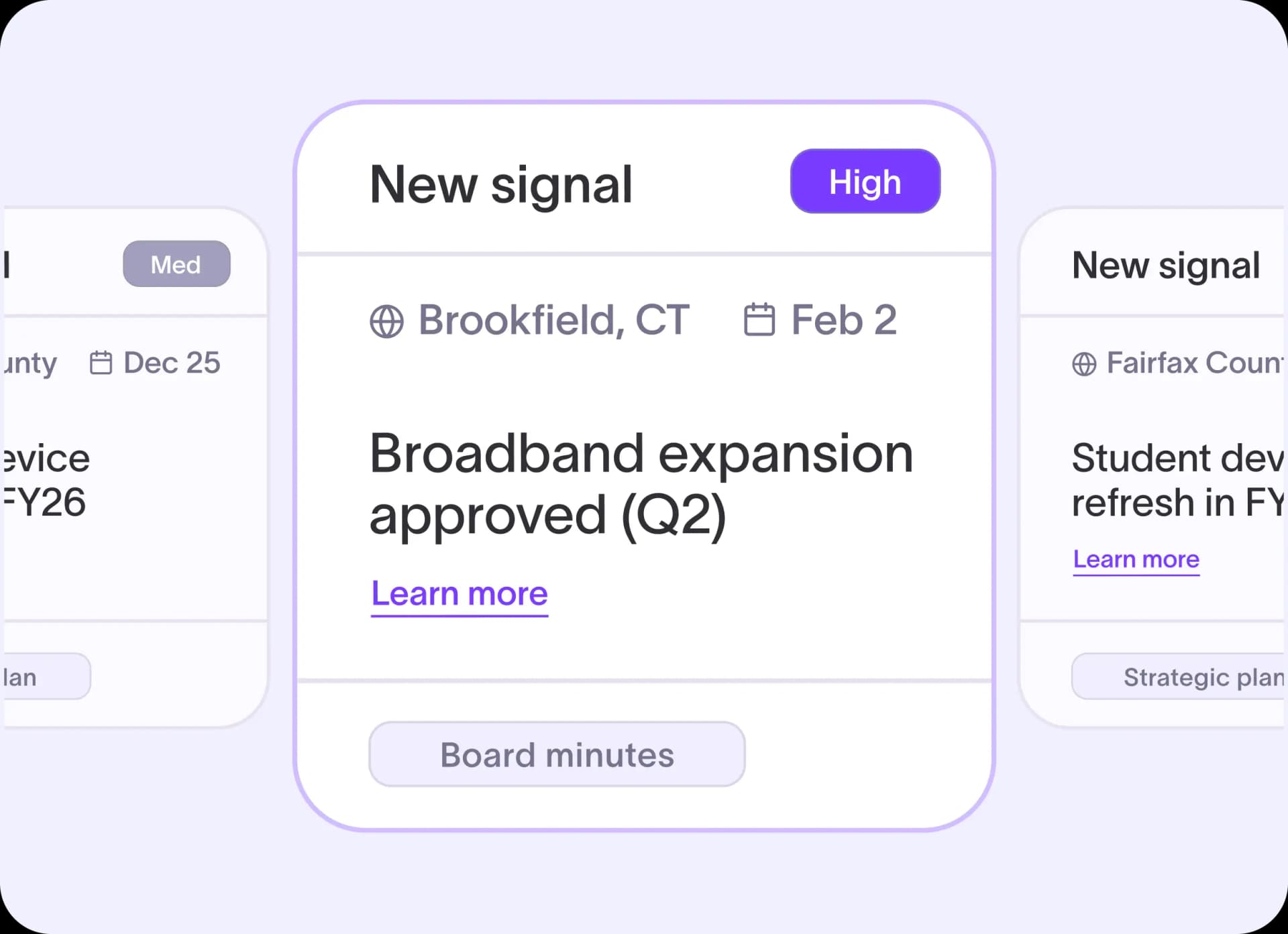
Starbridge’s Buying Signal Monitor tracks more than 320,000 government and education entities and surfaces pre-RFP activity from board minutes, strategic plans, budgets, grants, contract expirations, and bids. Each alert arrives with a verified contact and a reason the timing is right, routed to the rep who owns the territory.
GovWell booked five meetings in its first week on the platform and now sources 15% of its total qualified pipeline from Starbridge.
How to decide which accounts to pursue first
Even with buying indicators in hand, a territory of thousands of districts, cities, counties, and institutions is too big to work without prioritization.
That’s why reps default to geography or company size and miss the accounts that are ready to buy right now. A systematic way to rank the market fixes that.
A signal-driven framework for ranking your market
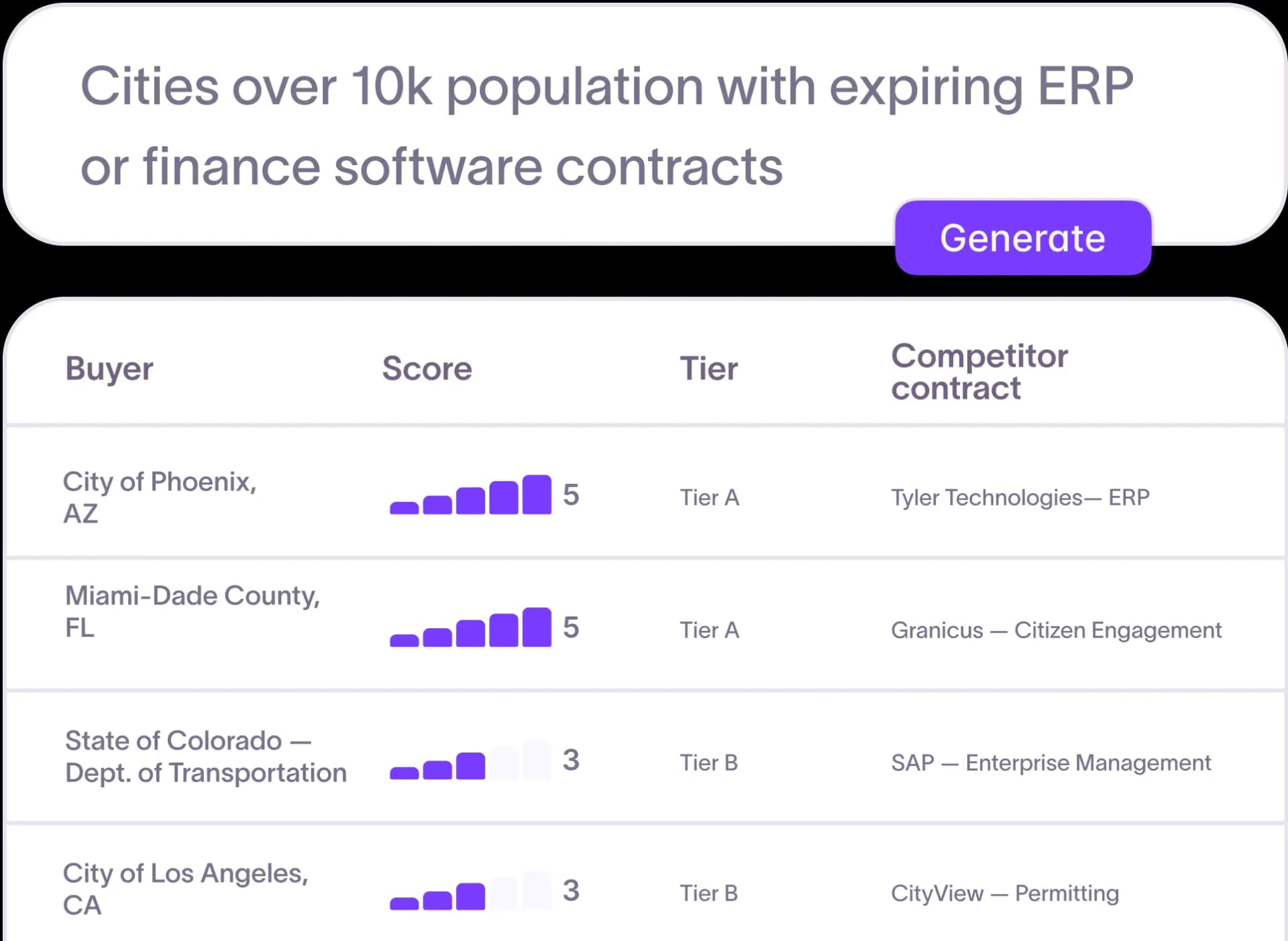
Score accounts on buying indicators, not gut feel. A practical model ranks each account on 5 to 7 attributes, with buying readiness first and firmographics last.
- Contract expirations and incumbent vendor usage
- Propensity to spend based on recent buying indicators
- Grant activity and funding environment
- Budget figures and trends
- Enrollment or population size, as supporting context
Scored accounts drive real decisions downstream. They shape call lists, territory design, and outbound segmentation, so every rep spends time where intent is highest.
Starbridge builds this scoring through a Buyer Bridge, where teams define criteria in plain language and every account is scored across the full market. Scores update automatically as new indicators arrive, so the ranking reflects demand as it moves.
inquirED replaced manual board-document research with signal-driven scoring and drove $200,000 in new pipeline in its first quarter.
How to reach the right person once you know the account
Ranking accounts only helps if you can reach the right person inside them. Stale contact data makes reps email someone who left the role a year ago. In a small, relationship-driven market where reputation travels fast, one misfire can cost you the account.
Starbridge’s Contacts & Company Data is built for this problem. It crawls government sites, district portals, and board minutes with proprietary web-agent technology, then waterfall-enriches and bounce-checks every record. The output is verified names, emails, and phone numbers for decision-makers across the market, so reps stop verifying contacts and start acting on them.
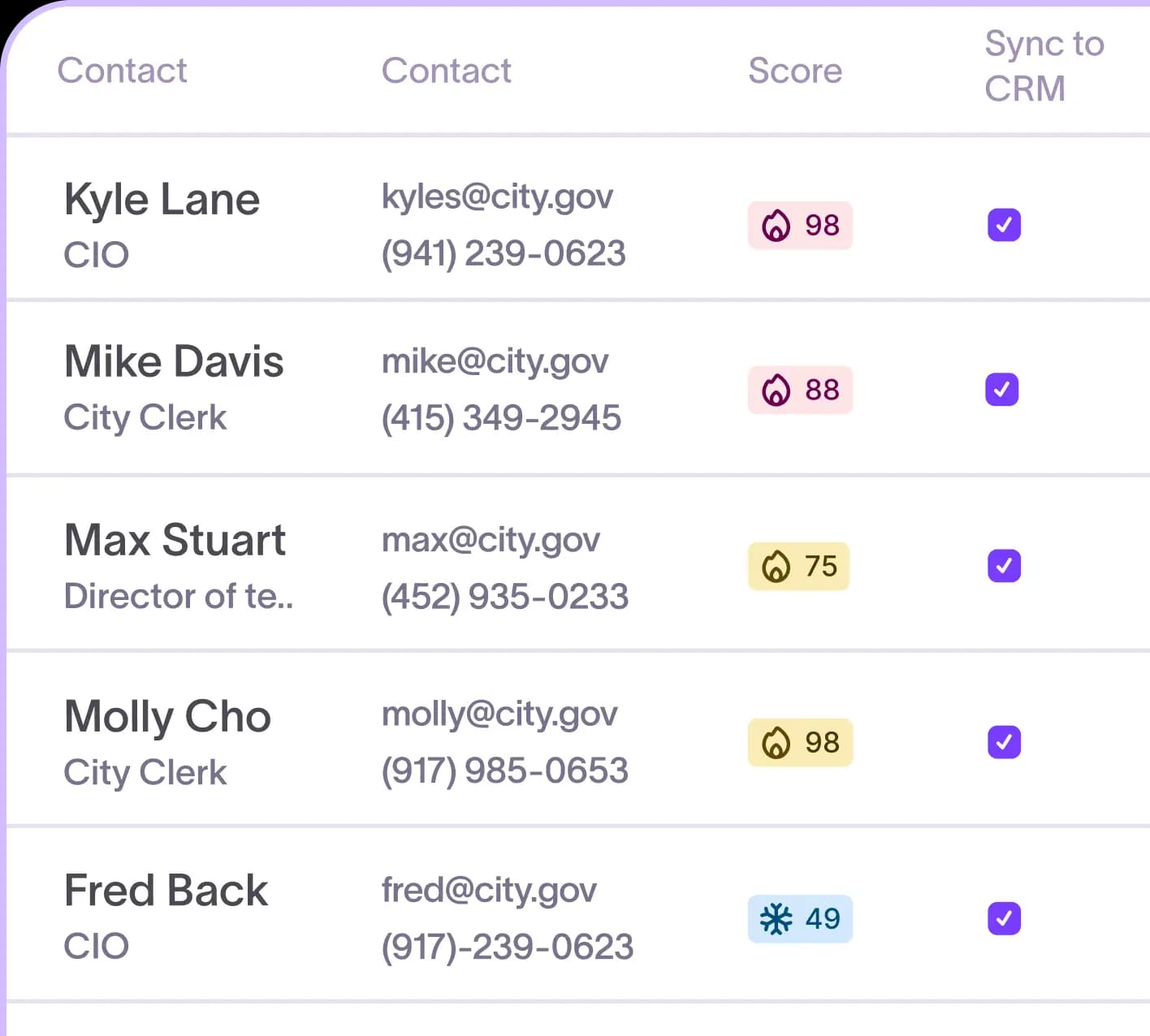
The accuracy holds up under testing. Starbridge contact data hit 98% email accuracy across a 14,000-email test, a 2% bounce rate versus the 15% to 25% common with generic databases.
How to turn account context into outreach that lands
The best discovery calls start before the call. A rep who knows the incumbent vendor, the contract expiration date, and what the account spends today can open with a point of view instead of a list of discovery questions.
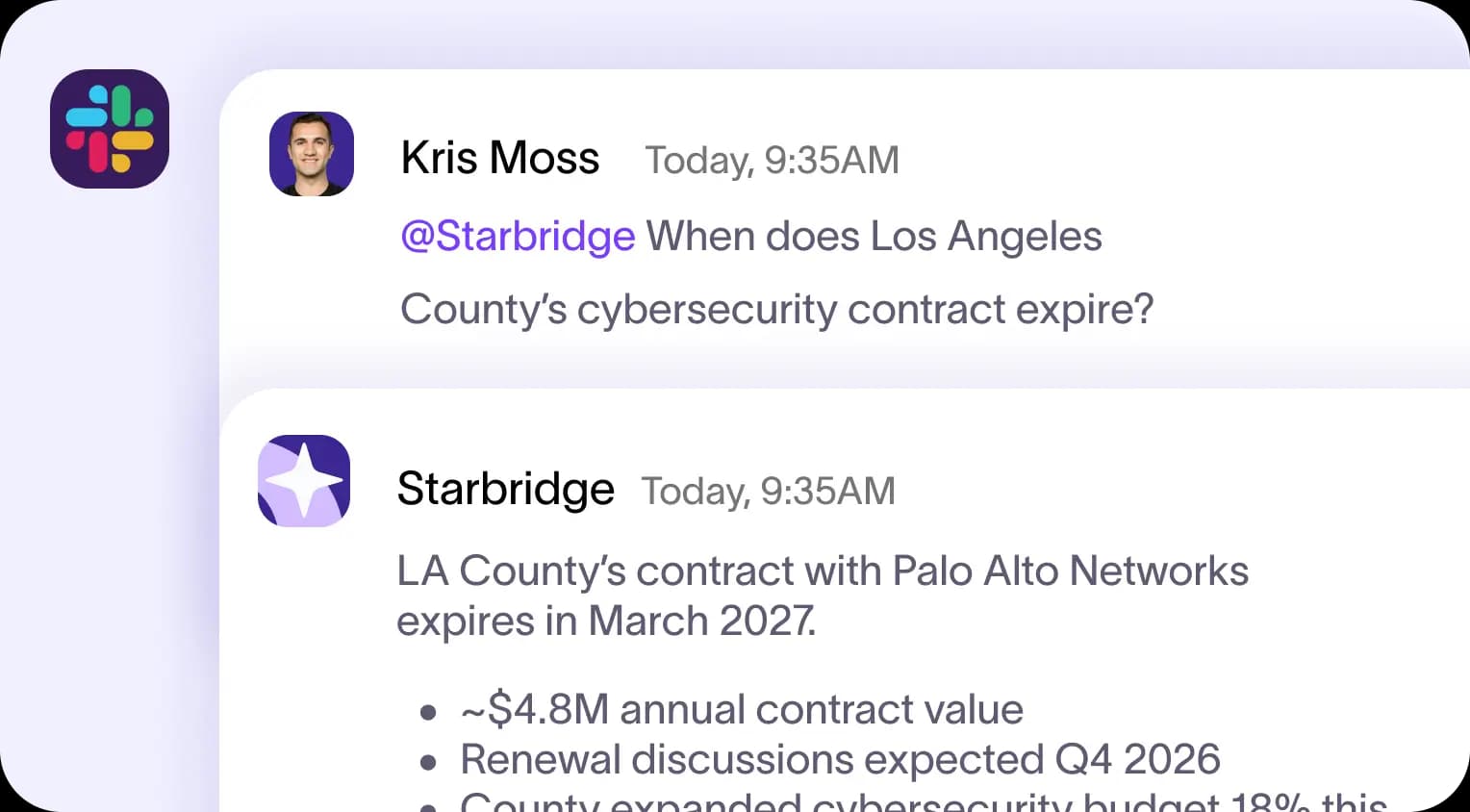
That research used to take hours per account, and only a few reps ever did it well.
The same context also writes a better first email.
Compare a generic request for 15 minutes to walk through your platform with a note that names the district’s contract ending in June, references the board’s recent discussion of the problem, and offers a short look at how peer districts handled the same transition. The first reads like a pitch. The second reads like help, and it arrives while the buyer is still deciding what to ask for.
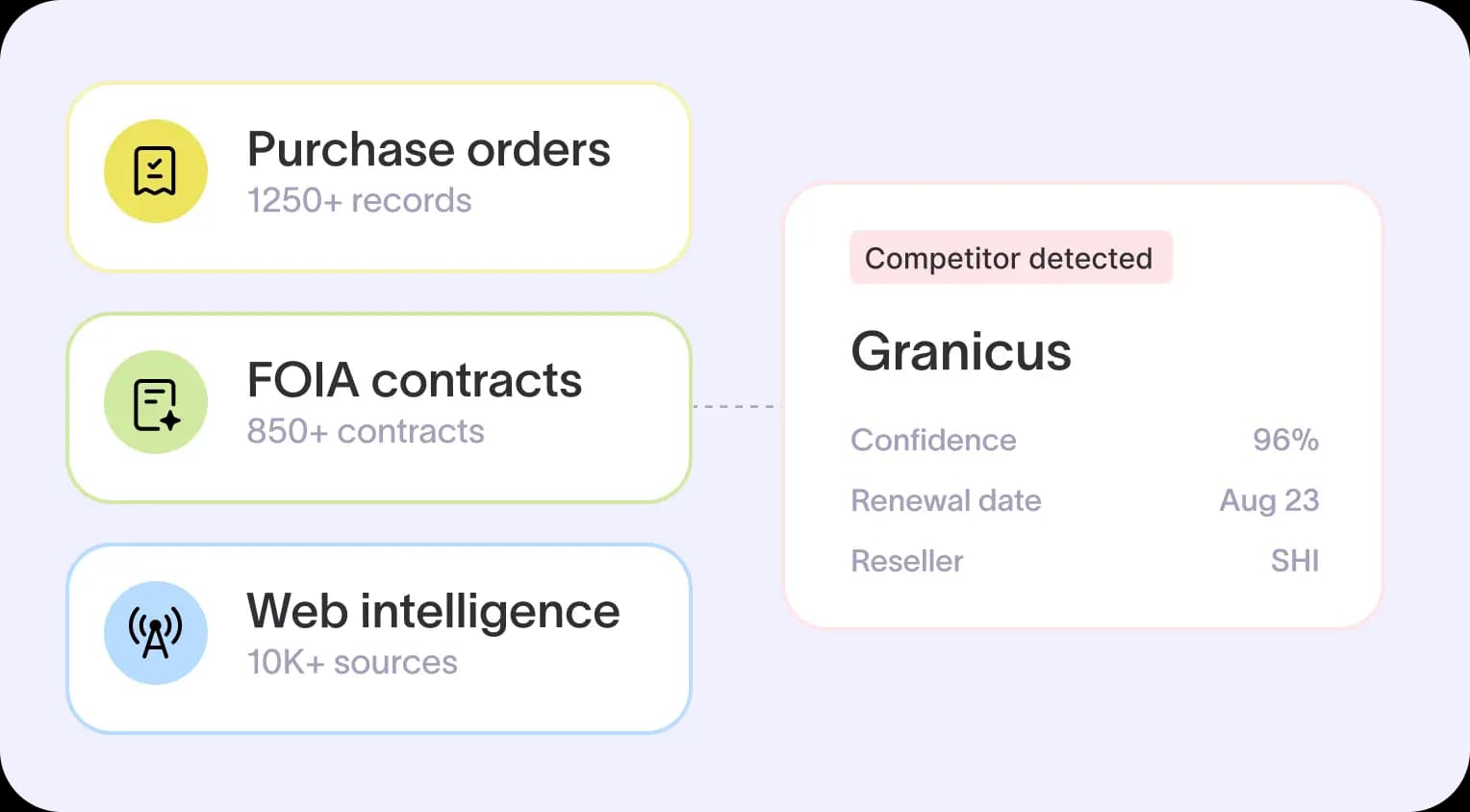
Starbridge’s Public Spend Intelligence turns that research into a repeatable, team-wide advantage. It surfaces purchase data, full competitor contracts, expiration dates, and raw vendor proposals through automated FOIA processing, so reps skip records requests that average around 59 days.
Frontline Education cut account research time by 90%. Research that once took a rep two hours now takes five minutes.
Win the deal before SAM.gov and other portals know it exists
By the time a final solicitation appears on SAM.gov or a district bid board, the requirements are largely defined, and a competitor may have already helped shape them.
The work that wins happens earlier.
Read buying indicators while the need is still being discussed. Rank the market by who is actually moving. Walk into every call knowing the incumbent and the contract terms, and put outreach in front of the buyer before anyone else does.
Doing that for one account takes an afternoon of reading board packets. Doing it across your entire TAM takes a different approach.
Starbridge is the AI GTM platform built on the most comprehensive dataset of public-sector buyers and buying signals. It helps companies selling to state and local government, K–12, and higher education identify, prioritize, and engage high-intent opportunities before the competition.
See which of your accounts are already showing buying intent. Book a demo.
Frequently asked questions
It means engaging during the pre-solicitation window, before a formal solicitation is posted. For state and local government, K–12, and higher education buyers, there is no single nationwide equivalent covering every buyer. The buying indicators before the RFP live in board agendas, budget documents, and procurement pages instead.
You monitor early buying indicators across the market instead of watching bid boards. Board minutes, budgets, grant awards, leadership changes, and contract expirations all surface intent weeks or months before a formal posting. Track those indicators across the entities in your territory and you reach buyers while the requirement is still open.
The strongest indicators for K–12 and higher education are grant awards, budget line items, board and strategic-plan discussions, and expiring contracts. A grant is especially valuable when it provides funding for a relevant purchase and a clear obligation deadline. An expiring contract opens a clear window to compete before a renewal locks in.
SAM.gov centralizes federal procurement notices, which users can search by NAICS code and other filters. State and local government, K–12, and higher education have no single nationwide portal. Their procurement runs fragmented across board agendas, district sites, and hundreds of one-off bid boards.
To submit most federal offers or quotations, you need a Unique Entity ID and an active SAM.gov registration, subject to applicable exceptions. You can search SAM.gov without registering. State and local government, K–12, and higher education buyers generally use their own portals and vendor registrations for their procurements. Requirements vary by entity, so check the process for each buyer you pursue.
Explore our use case library
 Automate account research with AI agentsStop manually researching accounts. Starbridge AI agents automate account research by monitoring buying signals 24/7 and surfacing the right contacts.
 Identify competitor contract expiration datesThe RFP is usually a formality. Starbridge surfaces competitor contract expiration dates so your reps reach accounts before the renewal cycle closes.
 Create a conference campaignTurn conference badge scans into pipeline. Import your contact list, surface buying signals across every account you met, and follow up with context.